Textured Nails Ideas That Add Dimension to Every Manicure
Flat color still has its place, but texture is what makes a manicure feel considered. It changes the way light hits the nail, the way a design reads from arm’s length, even the way a simple nude polish feels once it is finished. In the salon, textured nails are often the point where a basic set turns into something memorable. You can take the same shade of burgundy, baby blue, or peach and make it look completely different with chrome powder nails, matte top coat, sugar finishes, raised gel details, or a whisper of nail foil art.
That added dimension matters because nails are small. Unlike clothing or hair, nail art has only a tiny canvas to work with. Texture helps the eye notice detail faster. A glossy swirl next to a velvet matte surface reads immediately. A 3D seashell ridge catches light in a way painted lines never could. Even minimalist designs such as line art nails or geometric nails gain depth when one element is slightly raised or intentionally gritty.
The best textured manicures are not always the most elaborate. Some of the strongest sets I have seen relied on one smart contrast, like glossy heart nails over a matte mocha base, or a single chrome accent over soft sage green nails. When texture is used well, it gives shape to a theme instead of burying it.

What texture does that color alone cannot
Color creates mood, but texture creates movement. That is why textured nails photograph so well and still look interesting in person. A flat lavender polish can look polished and clean. Add a pearl chrome powder over it, and it shifts as you move your hand. Use a velvety magnetic finish over the same lavender, and suddenly it looks plush, almost fabric-like. Put a matte top coat on half the nail and a glossy top coat on the other half, and you have a subtle design before adding a single motif.
This is especially useful when you want nail art inspiration that feels grown-up rather than busy. A lot of clients ask for trending nail designs but do not actually want ten tiny illustrations on both hands. Texture solves that problem. It keeps the manicure current without requiring every nail to tell a different story.
It also changes the personality of familiar trends. French tip variations, for example, have been everywhere for years. Yet ombre French nails with a soft airbrushed fade and a glazed finish look modern in a completely different way than colorful French tips outlined in metallic silver nails or rose gold nails. The structure is similar. The finish changes everything.
The textured finishes worth knowing
Not all texture is raised. Some of the most elegant options are visual textures, created by shine, grain, reflectivity, or layering.
Chrome powder nails are the obvious starting point because they are versatile and dramatic without being difficult to wear. A chrome layer over nude gives a glazed, almost wet finish. Over black, it reads futuristic. Over coral nails or peach nails, it can soften the brightness and make the color look lit from within. Silver nails and gold nails are classic choices, but rose gold nails and copper nails often feel warmer on skin and pair beautifully with earth-tone nails.
Nail foil art creates a more irregular texture. It is less mirror-like than chrome and more broken, which makes it useful for designs that need movement. I like foil on ocean nails, mermaid nails, and moon nails because it mimics shimmer in a natural way. Tiny fragments placed into nail salon Shelby Township a jelly blue base can look like sun on water. The same idea works on cloud nails with iridescent foil tucked under milky white gel.
Matte finishes are underrated in this conversation. People think of texture as something you can feel, but the visual softness of matte is a texture in its own right. Matte burgundy nails feel richer than glossy burgundy. Matte sage green nails can look almost velvety. If you add glossy raised dots, swirls, or stars on top, the contrast does the work for you.
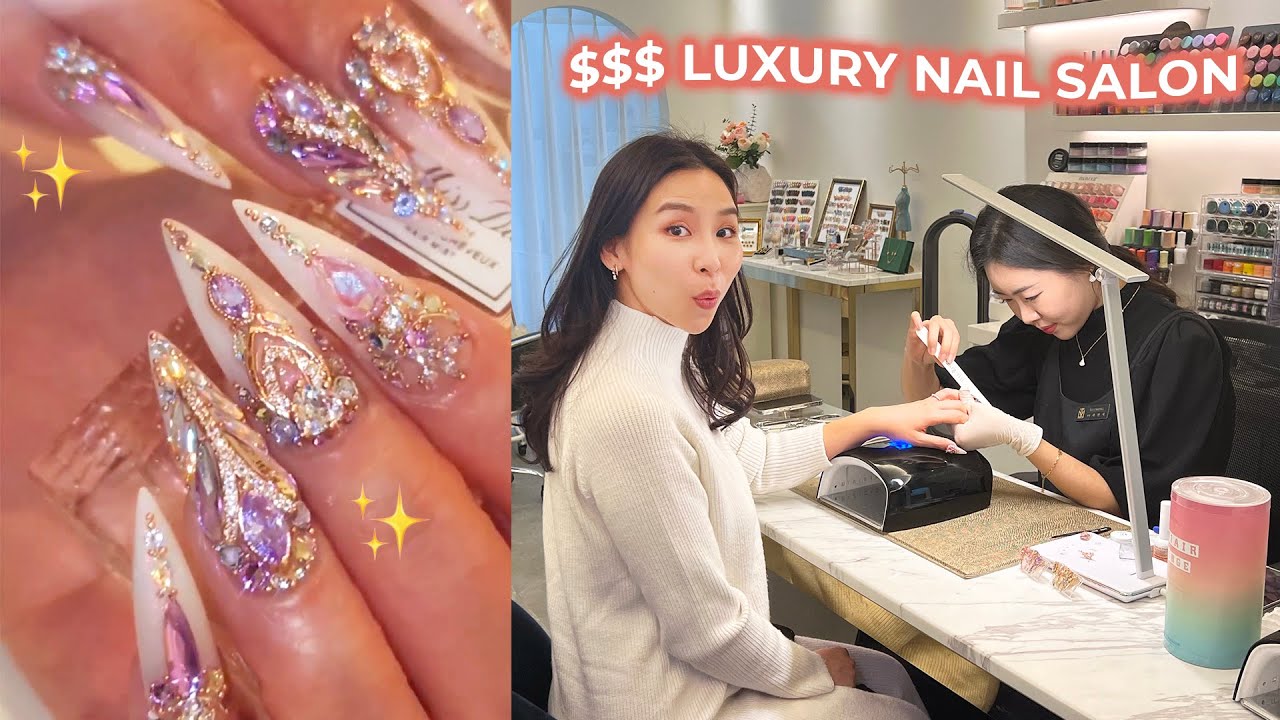
Then there are true 3D elements. Builder gel, sculpting gel, acrylic powder, sugar finishes, caviar beads, and encapsulated glitter all create physical dimension. These are the sets that make people ask to see your hands up close. Rose nail art with sculpted petals, seashell nails with raised ridges, and candy nails with glossy drips all benefit from actual relief. The key is proportion. On a short natural nail, one raised accent often looks cleaner than trying to sculpt every finger.
Watercolor nails and airbrush nails sit in a different category. They are not textured to the touch, but they build visual depth through translucent layers. That depth pairs especially well with texture on top. A watercolor sky in baby blue and white becomes cloud nails once you add a few puffy gel details. A soft airbrushed sunset can turn into beach nails with a dusting of shimmer and a tiny 3D sun.
Theme-driven ideas that work especially well with texture
Some design themes almost beg for dimension. Fruit nail art is one of them. Cherry nails, strawberry nails, and lemon nails can look cute when painted flat, but they become far more convincing with glossy fruit surfaces, tiny seed details, or jelly-like color. Strawberry nails, for instance, often look best with a high-shine red base and subtle raised yellow seeds. Lemon nails can use a sugared yellow finish for the peel while keeping the flesh glossy. Even small choices like a matte green stem next to a glossy fruit body make the design more legible.
Floral ideas also benefit from layering. Daisy nails are usually simple, but a slightly domed gel center gives them charm without making them fussy. Rose nail art is more advanced, yet it is one of the clearest examples of when 3D earns its place. Flat painted roses can be beautiful, especially in watercolor style, though sculpted petals catch shadow and light in a way brushwork alone cannot. On longer almond or coffin nails, one or two raised roses are usually enough.
Celestial sets are another natural fit. Star nails, moon nails, cloud nails, and sun nails all rely on contrast, so texture helps define them. A matte midnight base with glossy constellations feels restrained. Chrome stars over a mocha or navy background feel more graphic. Moon nails with pearly chrome look soft and luminous, while a raised sun on a coral or peach gradient adds warmth and a slight retro note. These themes can quickly tip into costume if every nail is crowded, so texture works best when it highlights one symbol rather than multiplying all of them.
Ocean nails, beach nails, mermaid nails, seashell nails, and tropical nails may be the most forgiving category for texture because the real-world references are already tactile. Water moves. Shells have ridges. Sand is granular. A mermaid set can use chrome powder nails, iridescent flakes, and jelly layers all at once if the color palette stays disciplined. Beach nails often look strongest when they avoid literalism and focus on finish instead, such as sandy matte beige with glossy wave lines, or baby blue jelly with thin white foam detail. Seashell nails are the exception where obvious 3D sculpting is usually the point.
Playful art styles also pair well with texture, especially checkerboard nails, swirl nails, wavy nails, dot nails, and polka dot nails. A checkerboard pattern can look flat and graphic with glossy polish, or softer and more fashion-forward when one color is matte and the other is glazed. Swirl nails and wavy nails gain depth if some lines are raised. Dot nails and polka dot nails can be transformed by making the dots domed rather than painted, which gives them a candy-like finish.
Even novelty themes such as mushroom nails, heart nails, and rainbow nails become more wearable when texture is the focus rather than pure color. Mushroom nails in earth-tone nails and mocha nails, with a matte background and glossy caps, feel charming rather than cartoonish. Heart nails in clear builder gel over a nude base are subtle enough for daily wear. Rainbow nails can move away from kindergarten energy if they use sheer tints, soft ombre French nails, or reflective top layers instead of hard stripes.
Color choices that make texture show up better
The color under a textured finish matters more than many people realize. Pale shades reveal surface detail beautifully because they do not compete with it. Lavender nails, sage green nails, baby blue nails, and peach nails are excellent for pearly chrome, watercolor blooms, or tiny 3D accents. These shades tend to flatter softer designs such as daisy nails, cloud nails, moon nails, and delicate line art nails.
Brighter shades bring more energy, though they need restraint if you are adding multiple finishes. Neon nails can be stunning with a matte top coat and one glossy motif, but neon plus glitter plus chrome plus 3D often becomes visually noisy. Coral nails work particularly well because they sit between bright and soft. They hold a tropical theme beautifully and can support sun nails, fruit nail art, or beach nails without overwhelming the texture.
Deep shades create the strongest contrast. Burgundy nails under gold foil look luxurious. Mocha nails with cream raised details look modern and expensive. Deep green or navy under silver nails or chrome stars turns celestial art into eveningwear. These combinations are ideal if you want textured nails that read elegant rather than playful.
Metallics deserve a separate mention. Silver nails, gold nails, rose gold nails, and copper nails do not need much else because they already have visual texture. A metallic French tip variation, especially on a sheer base, often looks more refined than a full metallic nail. If you want a little more detail, add a subtle raised line, a single star, or a tiny heart. That is usually enough.
Where textured nails can go wrong
The biggest mistake is scale. A design that looks balanced on a long almond extension can feel crowded on a short square natural nail. Texture takes up visual space quickly. If a client wants cherry nails, checkerboard nails, cloud nails, and chrome all in one set, the answer is not necessarily no, but it usually means narrowing the idea. Maybe the cherries live on two accent nails, the checkerboard becomes a tiny French tip detail, and the chrome is limited to a sheen rather than a mirror.
The second issue is wearability. Heavy 3D art catches on knitwear, hair, and pockets. For vacations or events, that is not always a problem. For someone typing all day, putting in contact lenses, or caring for small children, high-relief designs can become irritating by day three. In those cases, visual texture is often the smarter choice. Matte against gloss, foil under gel, or softly raised line art gives depth without the inconvenience.
Balance matters too. Not every textured set needs to be maximalist. Some of the most polished manicures I have seen used a single statement nail. A full hand of seashell ridges can feel too literal. One shell accent with glossy nude, baby blue, or sage on the rest of the nails often looks more expensive. The same rule applies to candy nails, mermaid nails, and tropical nails. Texture has more impact when the eye gets a place to rest.
Textured ideas matched to real life
If you are choosing a set based on how you actually use your hands, this is the rough order I suggest to clients:
- Low maintenance: matte and glossy contrast, subtle chrome powder nails, minimalist line art nails
- Moderate wear: nail foil art, watercolor nails, airbrush nails, ombre French nails
- Statement without too much bulk: raised swirls, domed heart nails, glossy fruit nail art over matte bases
- Occasion sets: seashell nails, sculpted rose nail art, candy drips, heavy mermaid nails
- High-impact editorial looks: layered chrome, 3D geometric nails, oversized celestial motifs
That sort of ranking is not rigid. Nail length, occupation, and the quality of the application all change the outcome. Still, it helps to think about texture as a lifestyle choice, not just an aesthetic one.
Pairing texture with shape and length
Texture behaves differently on each nail shape. Almond nails handle texture well because the tapered tip gives designs a natural focal point. Swirl nails, moon nails, and floral art usually sit nicely on almond without looking cut off. Coffin shapes offer the most room for checkerboard nails, geometric nails, tropical nails, and layered foil. Short rounds are best for restrained texture, such as tiny polka dot nails, glazed finishes, or compact daisy nails.
Natural nails also require a different approach than enhancements. On a healthy natural nail, too much bulk can look accidental rather than intentional. A slim layer of chrome, foil, or raised gel detail is usually enough. Extensions can support more dramatic structure, especially for mermaid nails, beach nails, or editorial French tip variations.
Length changes readability as well. On short nails, one motif per nail tends to be the limit. A tiny cherry, one star, a minimalist cloud, or a partial French tip variation will read better than trying to fit a whole scene. On medium to long nails, you have room to develop a concept, like turning a set into a sequence of ocean nails with shell textures, wave lines, and reflective foil. More space does not always mean more elements, but it allows texture to breathe.
Smart combinations that feel current
Some of the best trending nail designs right now mix a familiar motif with an unexpected finish. Cherry nails over a neutral matte base feel fresher than bright red everywhere. Strawberry nails done as glossy jelly nails with barely-there seeds look more fashion-oriented than cartoonish. Daisy nails in white over sage green nails feel cleaner than the old bright flower look many people remember.
Colorful French tips remain a useful foundation because they leave negative space, which makes texture easier to appreciate. A coral tip with chrome edging, a lavender tip with tiny raised stars, or a baby blue ombre French with cloud details all feel current without trying too hard. French tip variations are especially good for first-time texture wearers because they can be toned up or down easily.
One pairing I return to often is earth-tone nails with high-shine accents. Mocha nails with copper foil. Sandy beige with glossy beach waves. Olive or sage with tiny mushrooms or abstract line art. These combinations feel grounded, and they age well. They are also less likely to clash with clothing, which matters if you keep a set on for two to three weeks.
Pastel nails remain strong for spring and early summer, but texture stops them from looking overly sweet. A pastel rainbow nails set can feel sophisticated if the colors are sheer and the finish is pearl rather than glitter. Neon nails, by contrast, tend to look best with simple structures. Let the color be loud and keep the texture controlled. A matte neon with one glossy swirl usually outperforms a heavily embellished neon set.
Asking for texture at the salon without getting the wrong result
Clients often ask for “something textured” when what they really want is dimension, shine, or detail. Those are related, but they are not identical. If you want a useful salon conversation, describe both the look and the feel. Say whether you want the nails smooth overall, slightly raised, or noticeably 3D. Mention whether you prefer pearl, metallic, glossy, sugary, or matte finishes. Photos help, but specific language helps more.
A short brief like this usually works well:
- Choose the base mood, soft, bold, romantic, playful, or polished
- Pick one main finish, such as chrome, matte, foil, or raised gel
- Add one motif at most, like heart nails, star nails, lemon nails, or seashell nails
- Decide whether you want accent nails or a full set treatment
- Be honest about daily wear, especially if snagging would bother you
That level of direction gives a nail artist room to design while reducing the chance of leaving with something far more elaborate than you wanted.
The sets that keep earning compliments
The manicures people comment on most are rarely the busiest ones. They are the sets where texture supports the idea cleanly. A milky nude with rose gold nails at the tips and one tiny raised heart. Sage green nails with matte finish and glossy daisy nails. Baby blue ocean nails with translucent depth and just enough foil to mimic light on water. Burgundy nails with a velvet finish and a minimal gold moon. Those combinations feel memorable because the texture is doing a clear job.
Textured nails are not a separate category from nail art. They are a way to make every category better. They sharpen fruit nail art, soften florals, modernize French tip variations, and give trending nail designs more staying power. Whether your taste runs toward cloud nails and pastels, checkerboard nails and neons, or mocha nails with subtle metallic accents, dimension is often the detail that makes the whole manicure land.